
PTSD: How Trauma Triggers Can Help Us Heal
A Post Traumatic Stress Disorder Story of Hope

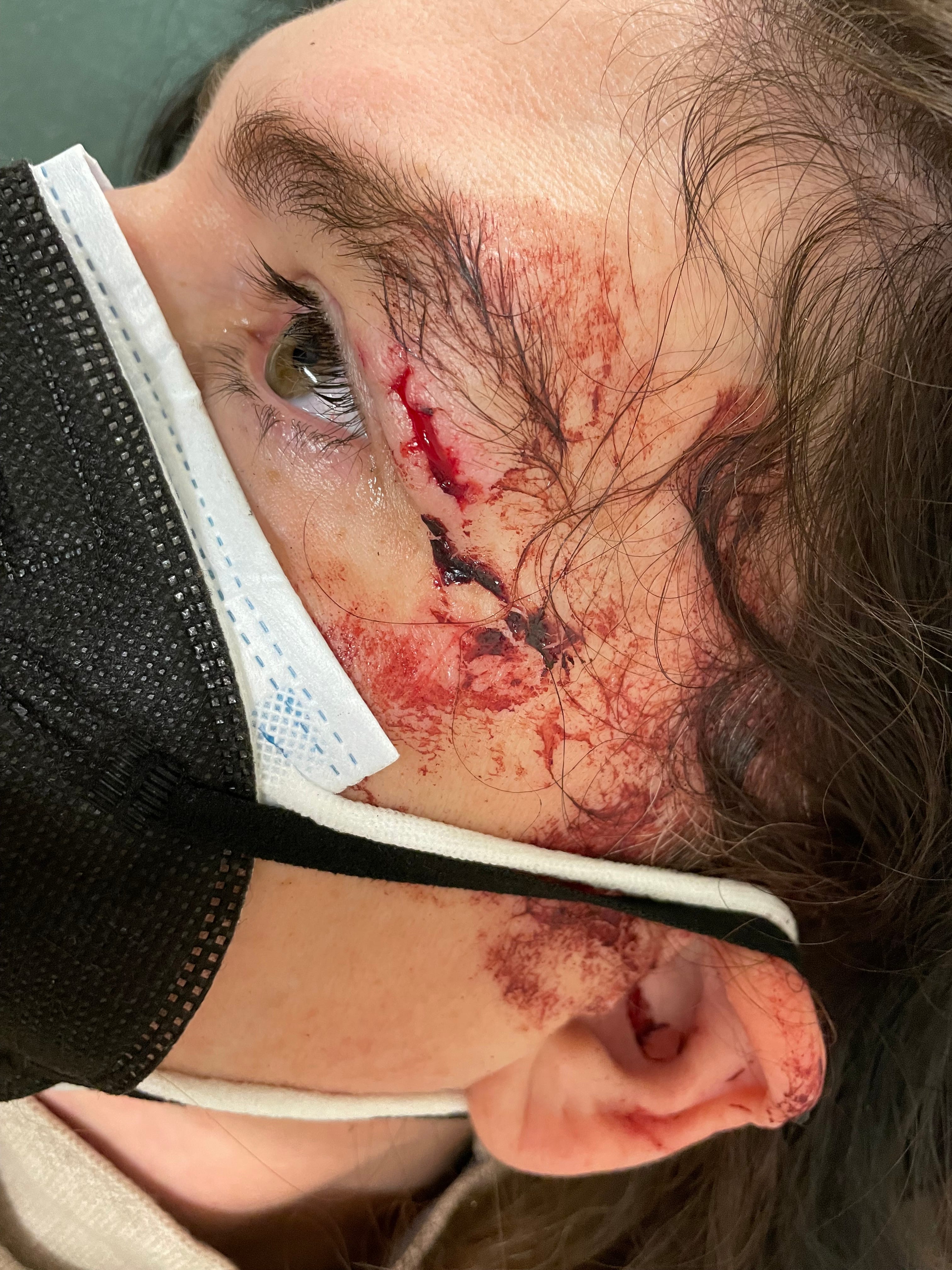
Triggers are invitations to help us heal, not places to hide so that we may stay wounded. A victim tells you the story of why they are stuck; a survivor tells you the story of how they broke free. This is my story of using triggers to break free of trauma.
On March 3, 2024, I took a pretty bad fall. It started as what felt like a simple trip on an uneven sidewalk. I caught myself with my wrists and then out of nowhere felt an unknown force on my upper back that slammed me back down. As soon as my face hit the sidewalk and my eyelid split open, it was as if I was transported to age 12, feeling helpless, physically trapped, and being beaten by a parent. The pain and sense of helplessness of the fall not only brought me back to my childhood of domestic violence that I successfully escaped but also the reality of physical abuse I continue to endure from a rare genetic disorder, vascular Ehlers-Danlos Syndrome, something I cannot escape. This is what’s known as an actual trigger, which comes from having Post Traumatic Stress Disorder (PTSD).
Normally, we tend to only associate PTSD with soldiers in war. An example might be soldiers who hear fireworks going off suddenly feeling as if they are on the battlefield again; but it can also happen to anyone who has experienced multiple or severe physical trauma(s) in their life, as I have, because as Dr. Bessel Van Der Kolk wrote, “The body keeps the score.”
Every woman who has been sexually assaulted takes that assault with her, on some level (conscious or subconscious), into each gynecological exam, from Pap smears to giving birth, and even into sexual encounters where she gives consent. The same is true for physical violence. A simple stumble can turn into a reenactment of being beaten or sexually assaulted. When our body experiences trauma it can activate prior patterns of pain that have been recorded and stored in our muscle memory. This is why trauma can be so devastating and not something we get over but rather something we learn to integrate in order to live with it. The way out of this cycle of despair starts with us and how we respond to the trauma, and it ends with community support. This is my story of tripping through life and moving beyond triggers and out of survival mode.
The Corrective Experience
All healing begins with our relationship to ourselves and others. My childhood trauma gave birth to a series of dysfunctional relationships that created more trauma through adulthood. This is a common occurrence, known as seeking a “corrective experience” in order to heal. We find ourselves drawn to people who feel familiar, who remind us of the potential we saw in our abusers; and on a subconscious level, we think if we could only find a way to make it work with the new dysfunctional person, perhaps we can heal the relationship with the dysfunctional person who harmed us, find a way to forgive, or prove to ourselves that it wasn’t our fault or that we can, in fact, survive abuse.
Each relationship I had with someone who was familiar in their dysfunction ended as poorly as one might expect. I had an easy out to blame others for being toxic, but I have learned that blaming others is disempowering. Have you heard the saying that when you point a finger of blame at one person, three fingers are pointing back at you? I have labeled those three fingers that point back at us as the only things we have control over in life: our thoughts, our words, and our deeds.
Since I was the common denominator of all my dysfunctional relationships, I made the empowering choice to hold myself accountable and took radical responsibility for my thoughts, my words, and my deeds. This led me on a path of recovery since the late 1980s, which included studying world religions, spiritual practices, philosophy, the stoics, creative expression, 12-Step programs, and getting into both private and group therapy. If I was the problem, I had every intention of taking ownership, looking in the mirror, and changing and creating solutions; and if the problem was in the people I was drawn to, I was determined to learn how to disengage from dysfunction and be drawn to healthier people who are capable of also taking accountability and creating healing changes.
In the process, I ended up writing a book about achieving such freedom through boundaries, in which I wrote, “A boundary is a line we draw in the sand, not for others, but for ourselves. It’s not an invisible line other people are supposed to see and not cross. It’s a clear marker we create for ourselves under careful deliberation. It’s a tool we set to keep us where we want to be when our own judgement becomes clouded or manipulated. Boundaries help us protect our vulnerabilities so that we can remain openhearted people without having our hearts trampled on like a doormat. We get to choose the level of dysfunction we allow in our lives. We are allowed to prioritize inner peace over relationship drama.” Setting boundaries is taking radical responsibility for what we allow in our lives. Boundaries are commitments we make to ourselves that reflect in our relationships with others.
I’m happy to share with you that I did change both my own dysfunctional patterns and behaviors (once I recognized them and continue to do so as they pop up), as well as the type of people I allowed into my life. Perfection is not the goal, accountability, correction, and self-compassion are. As a result, while nothing and no one are perfect, the relationships I’ve chosen and have today are the best of my life. I’ve been married to the love of my life since 1990; and have a nearly grown daughter, who refers to me as her best friend (in addition to her childhood best friend). I also have a group of close friends that I’ve had for decades who I affectionately refer to as my “chosen family.” If I am the sum of the five people who I spend the most time with, I consider myself pretty dang lucky. I’m really grateful and proud of the people I spend the most time with; but that doesn’t mean I don’t still get triggered, especially by physical assaults. What I have learned over all these years is that when there is trauma, triggers to those traumatic experiences never really go away; but the way in which we respond to them can help us move through them in more gentle ways that allow us to maintain our sanity and grace and heal through the process.
Typically, when a person is triggered by a traumatic event, their mind and body have been conditioned to go into survival mode: to fight, flight, freeze, or fawn. While my go to survival mode has always been to fight back (face and confront it), there have been times when my body decided the best way to survive was flight (run away & forget), freeze (do nothing & deny), or fawn (people please & control) my way to safety. Can you relate to learning to smile through pain, tell everyone you’re fine, and take on more than your fair share of responsibility as a response to past trauma? Yeah, me too. We cannot change that which we refuse to recognize; but once we see the pattern, we can’t unsee it, which forces us to change. After the fall, the old, broken me would have immediately said, “I’m fine;” and I would have gotten up and told myself to walk it off.
The restored me recognized instantly that I was not, in fact, “fine.” The first act of self care was to ask for help. Asking for help is difficult for those who pride themselves on being able to do it all on their own. However, I didn’t begin to experience real healing until I got comfortable asking for help. Being able to ask for help is one of the first steps to understanding and believing that we deserve to be helped and are worth being protected from hurt and harm. Allowing others the honor of knowing they have value by being able to help us gives us the opportunity to show gratitude. It also teaches us balance so that we can learn to give as much as we receive and receive as much as we give in order to have healthy relationships based on reciprocity instead of repeating toxic patterns of trauma bonds between givers and takers.
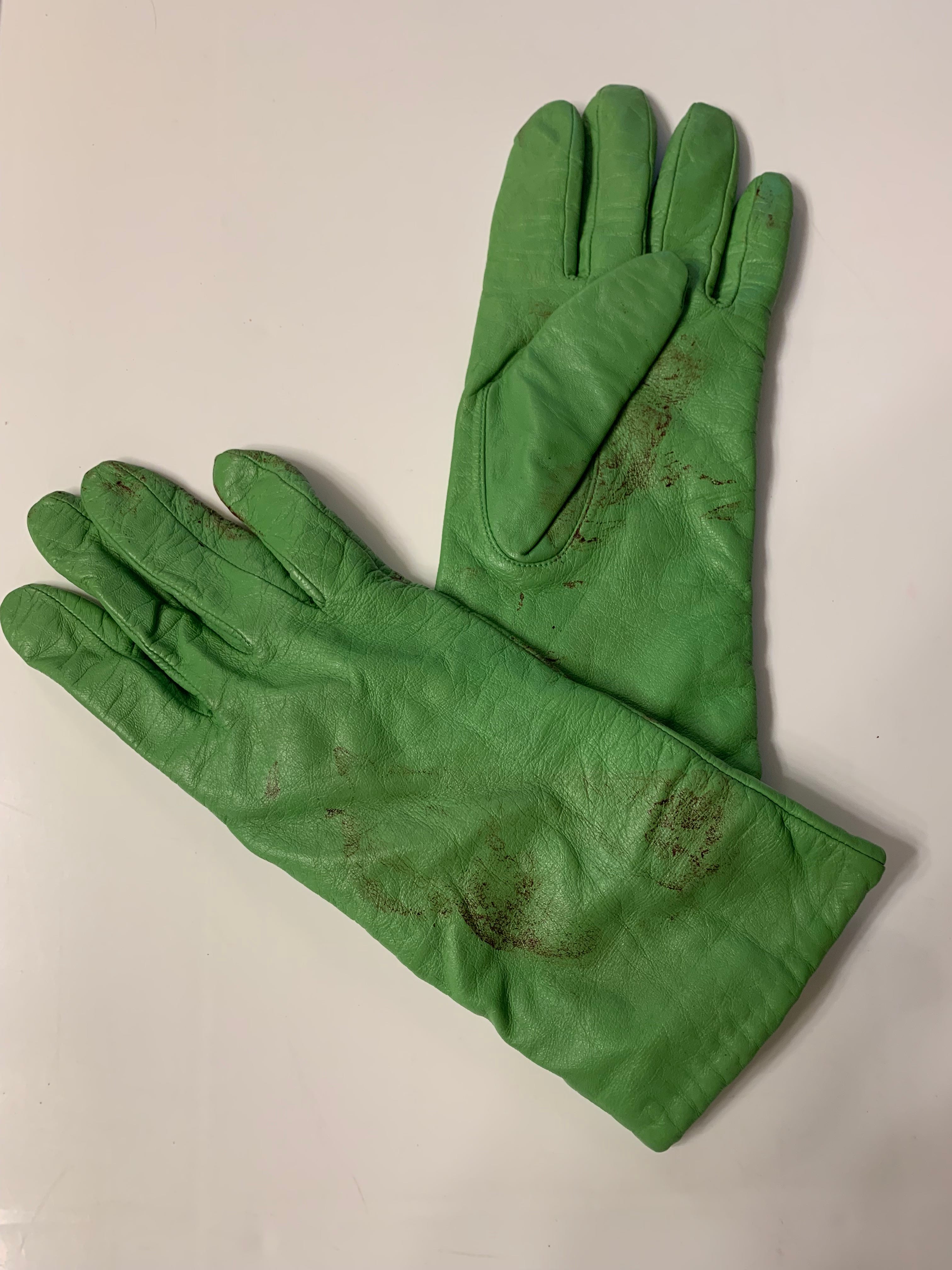
I remember thinking, “I hit my head so hard I felt every tooth move, and I’m going to need a cat scan. I probably shouldn’t move.” I didn’t care about how dramatic I sounded when I screamed out, “Help! Please, someone, I need help,” all I cared about was staying alive for my daughter, my husband, myself. A kind Samaritan named Rhonda, came to my rescue (insert song, “Help me Rhonda, help, help me Rhonda”). She called 911, held my green leather gloved hand over my eye to stop the bleeding, spoke gentle words of comfort, and stayed with me until the ambulance came. I was very grateful.
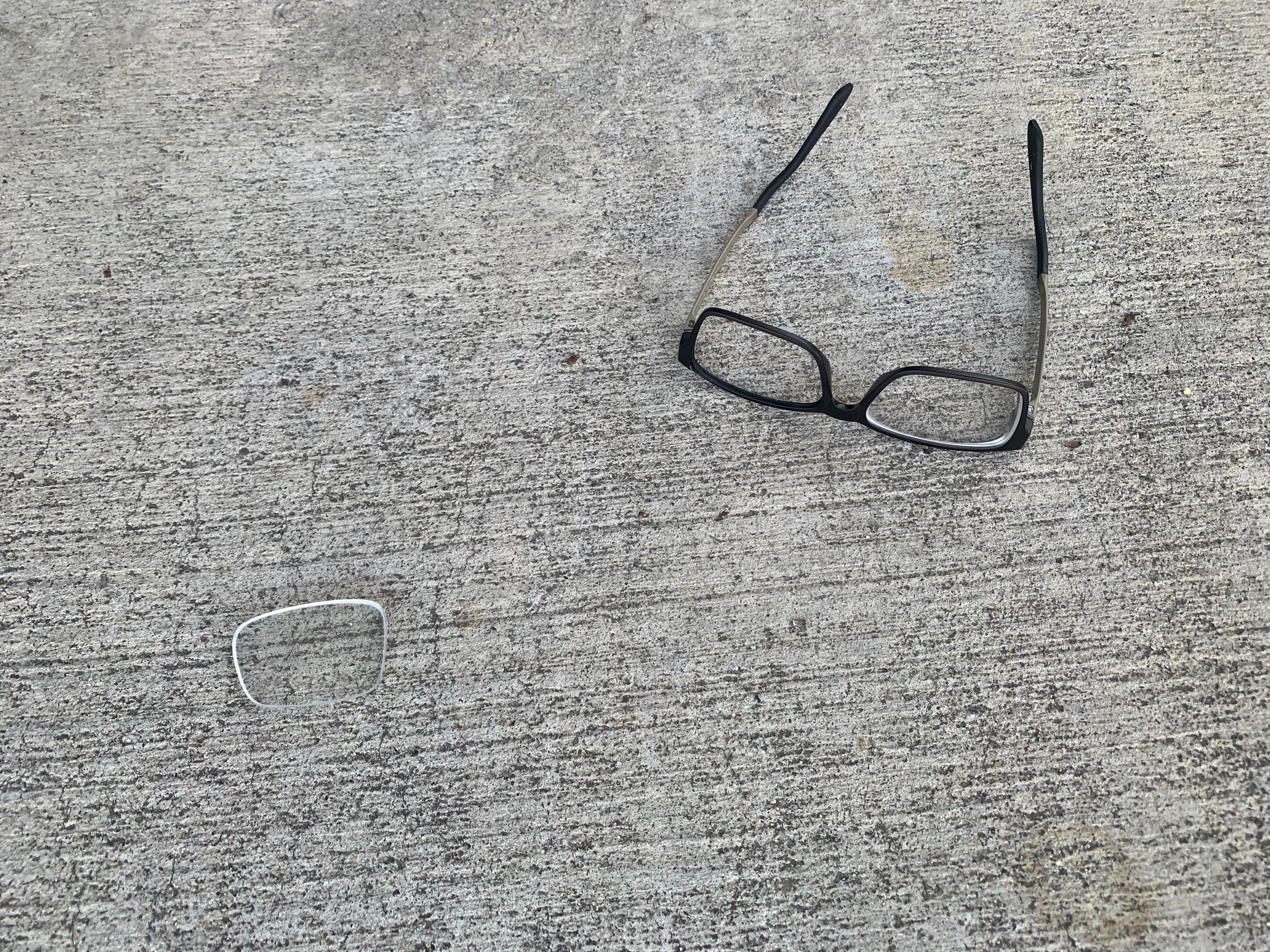
It was dark. My eyeglasses had flown off my face and been broken, so I couldn’t see; and when one of our senses is initially minimized, the others can be too—like the way we turn down the music when we’re driving to better help us see the address we’re looking for. Not being able to see made me feel claustrophobic. This brought me back to a childhood of being locked in a dark closet and forgotten about, as my drug addict parent went on a binge. Small, dark spaces can create claustrophobia, where there never feels like there’s enough air to breathe. Laying on the sidewalk, I felt like I had a space helmet on and that my words were trapped in a bubble around my head. I didn’t know if I had lost consciousness or if I had a concussion; but I knew my brain was foggy, my head hurt, and it was hard to remember my password for my phone so that my husband could be called to meet me at the hospital.
I was in a state of fear, worry, and panic because I am living with a brain aneurysm, courtesy of a rare genetic condition, vascular Ehlers-Danlos syndrome, that very few emergency room doctors seem to know about. I knew that I would likely need stitches or an MRI, which are problematic when you have a connective tissue disorder in which stitches move through your skin like butter and you are allergic to contrast dye—more trauma triggers, because it took decades of medical gaslighting before being properly diagnosed. On top of that, this disorder makes my body into a rag doll prone to daily subluxations, weekly spasms, and monthly dislocations that can come from something as simple as a sneeze. As I’ve mentioned previously, living with Ehlers-Danlos Syndrome is like living with a domestic abuser. I never know when the next hit is going to come, how much of my life I will lose when it happens, how severe the pain will be, or how long it will last. Because of this, I’ve had to learn to embrace triggers instead of running from them. In doing so, I integrate the pain as something within me and my management abilities, instead of something happening to me by an outside force that makes me feel helpless.
Dr. Bruce D. Perry and Oprah Winfrey penned the book, What Happened to You?: Conversations on Trauma, Resilience, and Healing. It’s a good book to help those who haven’t experienced trauma understand what trauma can do to a person. However, a more helpful question, for the person who experienced the trauma, is to simply ask, “What’s happening to you, now.” You see, part of the challenge with PTSD is that in the quantum realm, all time exists simultaneously, the only moment is the eternal moment of now; so to avoid being pulled back into the past, we have to remind ourselves to stay grounded in the present.
How To Stay Present—The First Breath
Laying on the sidewalk, I felt that sensation of being pulled back to a past trauma; so I did my best to do the three breath techniques a prior therapist, Rebecca Roth, taught me, in order to connect me to the present moment. On the First Breath, I ask myself, where am I physically in this moment of now? Answer, I’m outside, in public, feeling the hard, cold cement supporting my body. This is great question to ground oneself (pun intended) into present reality. The ambulance arrived; and as they were hovering over me and placing a neck brace on me, that sense of being immobilized created another PTSD trigger. I was still very aware that I’m me, a middle-aged woman on the sidewalk; but I was also experiencing the visceral memory of being a 12-year-old child with a parent sitting on top of me who has my shoulders pinned under their knees and is holding a broom stick across my throat trying to choke me, kill me in a drug induced rage; and I have to use all my strength and power to fight back and keep the weight of that stick off of my neck.
As I time travel back to the present moment, I become aware that the neck brace is too tight, and it feels like the broom and I have to use all my mental and emotional strength to resist tearing it off. I remind myself that the brace is not the stick. I have to convince myself that I am safe in the midst of feeling very unsafe. This is where disassociation comes into play. Sometimes it’s just easier to leave the present, by disassociating—to imagine the weight I feel on my body is just my daughter as a child sitting of my lap and playing patty cake. When my pain is its highest, I give myself permission to leave my body and imagine I’m somewhere pleasant looking into my daughter’s beautiful eyes, which are always filled with love. I call this “self-aware dissociation.” It’s a tool I use to get me from point A (excruciating pain) to point B (manageable pain), which eventually leads to point C (pain with the foundation of homeostasis, integration of all parts: thoughts, feelings, beliefs, and sensations). The key to health and healing is not to stay in disassociation but to use it when necessary in order to have the courage to endure discomfort until it passes.
We live in a world that has collectively been traumatized by the pandemic, recurring natural disasters, a worsening economy, tribalistic political division, and so much more. Instead of learning how to sit with the pain and process it, we either take sides and battle with facts we built from confirmation bias, or we use distraction tools, from media to medication, always in search of being entertained with an altered mind, to escape presence and reality in order to avoid pain. This has led to an insurgence of apathy, an erosion of the human conscience to care about each other. Instead of drawing us closer together to build community, we’ve become more tribalistic. Families have literally broken apart over vaccine status and who they voted for; and the general consensus is, “Every man for himself.”
Trauma has taught me that the quickest way to get past something is to simply be brave enough to go through it—to be present with my experiences instead of relying too heavily on dissociating, minimizing, or staying busy to try and avoid feeling the pain. The more we sweep under the rug, the taller the pile, the bigger the fall. Soon a tragically comic dysfunctional routine of “Have a nice trip? See you next fall!” plays out on a loop with family, friends, and work relationships until the messy debris is properly addressed and discarded. It’s not airing one’s dirty laundry to admit the emperor wears no clothes. Surviving trauma is the quiet humility of an ever-present fear that all sense of our well-being can be gone tomorrow, which walks with the bold confidence of faith in one’s ability to self-heal and the gratitude for the unexpected people and opportunities that come into our lives to make it possible to thrive.
The Second Breath
The Second Breath is the act of pulling in all the parts of ourselves we have loaned to the world. I start visualizing myself as a ship and all the pieces of myself that have manifested as worries and concerns, anchored in other people’s lives in addition to my own, as tethers that I begin to reel in: the cost of this ambulance, work deadlines, how I will finance my daughter’s education and artist-in-residency programs, and manage a growing debt, etc. I need all my parts to bring back my wholeness, strength, and the resources necessary to stay present. I breathe and practice the “5-4-3-2-1 technique” for moving through an anxiety attack. I focus on five things I can see, four I can touch, three I can hear, two I can smell, and one I can taste.
As I bring myself back to the present moment, I observe that there are half a dozen people around me and a cacophony of questions: Are you on a blood thinner? (No.) Do you have any allergies? (Yes.) Are you in pain? (No, “I just bleed from my eyes for fun,” I resist saying. Nothing like a little snark to get one engaged in surviving.) Someone is looking through my hip bag for my driver’s license (which is still attached to my body). A police officer is handing me his card. Dear Rhonda is talking to my husband and then my BFF because, pro tip: I had them in my phone as “ICE” (In Case of Emergency); and Rhonda is smart, calm, and knew what to do. I really thought she might be an angel. With all the chaos around me, I imagine myself as Stillwater, the giant panda from the children’s book series entitled Zen Parables, who finds peace in every step. I breathe and continue to focus on the present moment to anchor me in this reality, even though my right arm seems to be shaking uncontrollably; and I’m wondering if this means my brain aneurysm has burst.
The Third Breath
On the Third Breath, I bring in the “God Squad,” the ancestors and spiritual energies that make me feel safe. I imagine my husband and daughter by my side, my closest friends and family; and for extra measure, I bring in Viola Davis and the entire cast of The Woman King, because that’s the kind of energy I need to make me feel safe. This is when I remind myself that I am not alone, that we have have forces seen and unseen that we can call in and request back-up from. This connects me back to source, to oneness, to engaging waves of love. Instead of feeling a sense of fear that contracts my sprit and isolates my body, I breathe in love. I begin to radiate love and feel an expansion of self. I get to chose which energetic radio station I’m going to tune into: the Frequency of Fear or the Vibration of Love.
In the ambulance, I lay still as my blood pressure is being taken, the pressure in my head is building, the blood from my eye is dripping into my ear. I remind myself that I get to choose whether I worry about that which is beyond my control or align myself with the possibilities that everything could work out in my favor. I’m not religious, but I do believe in a power greater than myself. I started to pray for assistance and request from archangels (because it’s a tool that brings me peace) that only the best doctors and nurses for my situation will be there to greet me. I began to imagine myself being taken care of with compassion and expertise. I chose to believe that only those who are capable of learning, understanding, or knowing about my medical condition will be drawn to me and that I would be invisible to all others. I asked God to carry my pain so that I wouldn’t have to suffer. I became silent, not as a survival mechanism of freezing, but to remain calm and listen to the voice within guide me as to what to do next.
“We’re taking her to General Hospital* because of her Vascular Ehlers-Danlos, so it’s going to be about a 20-minute ride,” the young man driving the ambulance said to the young woman who was in the back with me—their ages combined still probably didn’t equal mine. It was a Sunday night. Traffic was light. I asked my caregiver how long she’d been an EMT. “Four months,” she said. It takes trust to surrender to inexperienced youth; but trust we must, as we are literally in their hands.
I closed my eyes and focused on square breathing. Breathe in for the count of four, hold for the count of four, breathe out for the count of four, hold for the count of four, repeat. I would not have had the presence of mind to do this under stressful circumstances had I not been in the habit of doing so each day under normal circumstances. This is the real reason a daily meditation practice, as simple as 10 minutes of stillness, can be so beneficial: it prepares us for the unexpected and gives us the opportunity to thoughtfully respond to stress instead of impulsively react.
Does Everything Really Happen For A Reason?
My mind began to ask why. “Why did this happen?” It’s common to ask, “Why?” whenever something unexpected happens, especially something we deem bad. We catch a cold; and we immediately go into Sherlock mode, trying to determine when and where and who gave us this cold. Some things in life could simply be random chaos and statistical averages. Spend enough time walking uneven sidewalks, and perhaps we’re bound to eventually fall. Nevertheless, I couldn’t stop asking, “How did this happen? I caught myself and was then pushed back down. Who or what pushed me, and why did this happen? What is the universe trying to tell me? To slow down? To stop?” It’s hard when we feel pain to not feel as if we’re being punished or caused it ourselves through some “victim mentality.” Call me superstitious, it wouldn’t be the first time; but my mind went to the conversation I’d had with friends a few weeks prior when I said, “I feel like something is coming and it’s not good but that I will be ok.”
Each time I turned on the radio, it played one of four songs that felt like messages I was supposed to pay attention to, “What’s Going On?” by 4NonBlonds, “Livin’ On A Prayer” by Bon Jovi, “Personal Jesus (reach out touch faith)” by Depeche Mode, and “Don’t Stop Believin’” by Journey. This resulted in two things: a realization that I’m not hip to what’s current in the music scene, and a medley I heard on a loop for two weeks leading up to the fall and it sounded like this, “What’s going on? You’re living on a prayer with your own personal Jesus, reach out, touch faith, and don’t stop believing.” I wasn’t about to change the radio station now. Thank you very much K-EARTH 101.1.
I chose to believe this happened for me, not to me, and that in time, the benefit or lesson would, or would not, reveal itself—my job was to release attachment while remaining curious. “Maybe they would find something in the emergency room they wouldn’t normally find in a doctor’s visit,” or I playfully mused, “Maybe this gash on my eyelid will give me an unexpected, and yet welcome, eyelift.” I made a commitment to rest while down, rise up with gratitude when I could get back up again, and trust that everything is happening for my greatest good. Learning to sit with discomfort and not knowing are key components to health and healing. These aren’t Pollyanna words of naïveté. Positive words of affirmation are the tiny collective of anchors that help keep us grounded in the present, instead of being perpetually pulled into a past that can bring on depression or a future which can cause anxiety. Trauma has taught me to expect the best, prepare for the worst, and be as present as possible.
I’m not one to overly indulge in the saying, “Everything happens for a reason,” although, I believe that everything that happens can be assigned a reason, if it helps the medicine go down, so to speak. I decided that maybe the “reason” was an opportunity to share my story, knowing that doing so could help others.
How To Move Through The Suffering
When we are hurting, our impulse is often to isolate which can help; but what I have found to be true is that complete healing happens in the presence of community support, friends, and family. Despite only having one shared car, my husband made his way to the hospital to join me, and my daughter started a prayer group with our nearest and dearest that my brain aneurysm would remain stable. I felt their support and I placed my trust in the faith that I would be okay. Knowing that we are loved and cared for is a comfort and plays a role in our healing.
I spent six hours in the emergency room; and just as I prayed and visualized, only the best doctors and nurses even noticed I was there. I never received pain medication; and I did wonder, if I were a man, whether that would have been offered. Being a woman, however, I had some in my purse, “in case of emergency,” of course. I did have to advocate for liquid stitches and educate the attending physicians at the teaching hospital about my genetic disorder. Nevertheless, I received the treatment I needed; and life moved on. It was never revealed who or what slammed me into the ground. Like so many things in life, it remains a mystery; and life goes on. A major component to surviving trauma is learning how to sit with the discomfort of the unknown and what Pema Chödrön calls, “Groundless Uncertainty.”
What a PTSD Trigger Feels Like
It took me three months to get back to “normal.” Processing pain can be a full-time job. To understand what it’s like to live with PTSD, it helps to know about the Baader Meinhof phenomenon (also known as the frequency illusion), which is when a thing you’ve just noticed or experienced suddenly appears everywhere all at once. The most relatable example is buying a new car and then seeing cars everywhere, just like the one you purchased. The question becomes, is the car really appearing more than it was, or are you just noticing more what was already present and shifting your attention, thereby creating the reality you focus on?
PTSD trauma triggers work much the same way. Imagine that every trauma ever experienced (domestic abuse, violence, sexual assault, etc.) is symbolized by a white car. Then imagine experiencing a new trauma, another white car, which then reminds you of every trauma ever experiences in your life that is related to a white car. Suddenly, just trying to eat, sleep, and work begins to feel like navigating an avalanche of white cars. Doing the most basic things felt like a 1980s survival of the video game FROGGER. I had the hardest time staying focused between the confirmation bias and selective attention of all the white cars symbolizing a lifetime of traumatic events. Selective attention is essentially hypervigilance, the brain saying, “This is important to your safety and survival: pay attention,” whereas confirmation bias is seeing more of what you’re looking for and believing that because you’re seeing it more, that equates to being more true or relevant.
Processing that fall and integrating the experience into a history of trauma while staying present was a constant tug-o-war of thoughts between the white car in the here and now and all the white cars in the past. I’d start my day as the me I know; but at some point, I’d hear a sound or feel a pain, or think a thought that would suck me back into my childhood, feeling helpless despair. I found myself walking into rooms and forgetting why I was there. I’d notice myself standing in front of a toaster waiting for bread that had popped up 10 minutes prior, but I was so lost in thought I didn’t notice it. Every trauma of the past was connected by a thread to the most recent trauma, and there was nothing I could do to quicken my recovery but revisit and reprocess each trauma as it related to the most recent one. The only way out is through. I simply needed time to process, to be present with the chaos, to recover.
When we’re grieving death, we’re grieving loss, and trauma is a loss, a death of safety being ripped from us. Mourning can feel like it’s going to last forever, like life will never feel normal again; and doing the simplest tasks can take the most Herculean effort. There were times over those 12 weeks when it took me four hours just to get out of bed and a Post-it note checklist to remind me to eat, shower, and do that single errand I planned. I needed more rest, more nothingness, more space to find and stay in the moment of now.
Integrating trauma is time traveling while remaining present—it’s exhausting! In fact, I’d like to talk to the universe about how I can sign up frequent flyer time travel miles to get the vacation I need after all this integration work (I didn’t take a vacation, per se; but I did travel, and it was a vital aspect to recovery, and I plan to write and share more in the next 12 months). When we lose time, we often lose money, and it can take community support to help pay the bills for our recovery. It takes compassion from those around us to help remind us of who we are and that we’re not alone. If you know someone going through trauma, offer what you can, everything helps.
I’m so grateful to my amazing husband, daughter, my new angel friend, Rhonda, and my phenomenal chosen family of friends who reached out and offered help when I needed it most. If you or someone you know is experiencing a PTSD trigger, please seek professional help and a change of scenery. Yes, leaving town for a few days or more might look like an escape on the outside, and it certainly has that element; but flooding the mind with new sensory experiences from a change in scenery and routine can do wonders for active PTSD triggers. The subconscious mind will still process the pain, while the conscious mind will get a bit of a break from the relentless waves of pain and trauma recall that can occur without a break.
I healed because I neither stayed in a state of blame and victimization, nor denial and minimization. I moved through it by being present and making peace with temporary discomfort. I healed because I had a community of support. As a society, we are so addicted to certainty and “knowing” that we forget that freedom often exists in the unknown; for the only constant thing in life is change, and when we can allow a place for the unexpected, we can integrate it into the wholeness of our beingness and get on with the task of living as a survivor, instead of dying as a victim. Don’t fear the trigger, it may just be the thing that finally sets you free.
* Changed because of HIPAA privacy
Sage Justice is the author of Sage Words FREEDOM Book One, an activist, a performing artist, a member of the Screen Actors Guild, and a 2024 alumna of the Château d'Orquevaux Artists and Writers Residency in France, which houses a piece of her writing in their permanent collection entitled, Comparing Ourselves to Others. Ms. Justice has had two solo shows: Simply Complicated Life (Los Angeles) and To Breed or Not To Breed (Madison Square Garden in NYC). She played the small role of the mayor’s daughter in David E. Kelly’s Emmy award winning Picket Fences. She has a fierce sense of urgency and passion for enlightened evolution, equality, and human rights advocacy through education and artistic expression. Balancing wisdom and humor, she most often writes about the enduring virtues that connect us all: love, and healing. Sage also post reels about her rare genetic disorder: vascular Ehlers-Danlos Syndrome on Instagram @SageWords2027 and continues her journey of infusing empathy and wisdom into universal challenges through monthly paid subscriber articles at: SageJustice.Substack.com, free one minute reads on her website, and occasional podcasts available on Apple and Spotify. She is part of the artist collective, SoulJourners with her filmmaker daughter, Gracie Justice and her music composer husband, Geoff Grace. They live near the coastline in southern California.
Sage, I appreciate better understanding about the experience. I’ve had 2 pts with EDS. Neither were able to offer the detail of the pain and disruption it caused. Detailing the breathing techniques and the reason ongoing practice developed those important tools. Really informative about PTSD care and support. I’m sorry you’ve had so many traumas and challenges. You are a great teacher.